
Best Roofing for Texas Heat: Energy-Efficient Options That Cut Cooling Bills
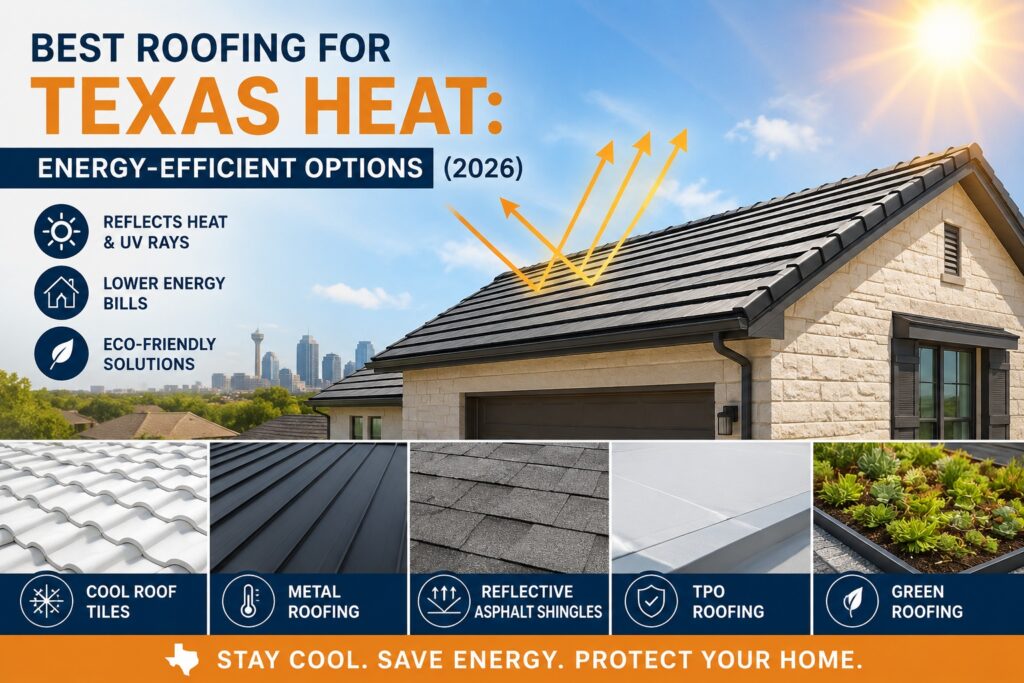
Comanche Roofing is a roofing contractor serving Austin, San Antonio, and the surrounding Central Texas communities that specializes in energy-efficient roof replacement, from reflective asphalt shingles to standing seam metal. For homeowners who just opened a July electric bill and felt their stomach drop, the roof is usually part of the story. A standard asphalt roof can push attic temperatures well past 130 degrees on a summer afternoon, and that heat does not stay in the attic. It radiates into the living space below and forces the HVAC system to run longer and harder to keep up. Choosing the right roofing system, and pairing it with proper ventilation, is one of the few home improvements that pays for itself in lower cooling costs year after year.
Table of Contents
ToggleWhy Texas Heat Destroys Roofs (and Inflates Bills)
Central Texas summers put roofs through a punishing cycle. On a 98 degree afternoon in Austin or San Antonio, attic temperatures in a poorly ventilated home routinely reach 130 to 150 degrees, and in extreme cases can climb past 160. That heat does three things at once: it bakes the shingles from above with direct UV exposure and from below with radiant heat rising off the attic floor, it degrades the asphalt binder and granule coating faster than the manufacturer’s warranty accounts for, and it forces the air conditioning system to fight a losing battle against a ceiling that is, in effect, sitting a few feet under an oven.
The surface temperature of a dark, standard roof can run 50 to 60 degrees hotter than a properly reflective one under the same summer sun. That difference does not stay on the roof deck. It transfers through the decking, through the insulation, and into the thermostat’s reading of the house, which is exactly why the same 1,800 square foot home can carry a wildly different July electric bill depending on what is on top of it.
What Makes a Roof “Energy Efficient”
Two properties decide how a roofing material behaves in the sun: solar reflectance, which is how much sunlight the surface bounces away instead of absorbing, and thermal emittance, which is how efficiently the material releases the heat it does absorb. Combined, they produce a Solar Reflectance Index, the number roofing manufacturers use to rate how a product performs in the heat. A cool roof is simply a roof with a high enough SRI, achieved through reflective granules, specialty pigments, or a naturally reflective material, to keep less heat moving into the building.
One correction worth making here, since a lot of roofing content online has not caught up: the ENERGY STAR certification program for roofing products ended in 2022, so no shingle, metal panel, or coating carries an ENERGY STAR label anymore. The Cool Roof Rating Council is now the reference body, and its Rated Products Directory lists the verified solar reflectance and thermal emittance values for individual products. It is also worth knowing that the federal tax credit some older articles still mention for reflective roofing expired at the end of 2025, so any energy-efficient roofing decision in 2026 should be evaluated on utility savings and roof longevity, not a tax rebate that no longer exists.
Material Comparison for Hot Climates
Reflective, CRRC-Rated Asphalt Shingles
Modern manufacturers, including GAF, produce shingle lines built with reflective granule technology specifically to raise solar reflectance without forcing homeowners into pale, washed out colors. These shingles cost somewhat more than a standard architectural shingle but far less than a full material change, which makes them the most common upgrade for homeowners doing a like for like roof replacement. Best fit: homeowners who want the shingle look and price point but want the heat performance dialed up.
Metal Roofing
Metal reflects a large share of incoming solar radiation and, just as importantly, sheds the heat it does absorb quickly once the sun goes down, so it does not keep radiating warmth into the attic well into the evening the way asphalt can. Standing seam and other panel systems also last 40 to 50 years with proper installation, which changes the cost math over the life of the roof even though the upfront price is higher. Best fit: homeowners planning to stay in the home long term, or anyone replacing a low slope section where standing seam performs especially well.
Tile and Clay
Tile’s advantage is airflow. The natural air gap beneath curved or interlocking tile lets heat escape before it ever reaches the decking, which is why tile roofs perform well in hot climates even in darker colors. Tile carries a higher material and structural cost, since the roof framing has to support the added weight, which makes it a better fit for new construction or a full structural reroof than a standard shingle replacement.
TPO and Flat Roofing (Commercial)
For commercial and low slope roofs, white or light colored TPO membrane is one of the most reflective roofing surfaces available, and it is the standard recommendation for Central Texas commercial properties trying to control rooftop unit and cooling loads. Coatings can also be added to an existing flat roof to boost reflectance without a full tear off.
Beyond the Material: Ventilation and Radiant Barriers
The shingle or panel is only one part of an energy-efficient roofing system. A balanced intake and exhaust ventilation setup, soffit vents pulling air in low and ridge vents letting it out at the peak, keeps attic air moving instead of stagnating under the deck. Without that balance, even a premium reflective shingle is fighting an uphill battle.
Radiant barrier decking or foil adds another layer of protection by reflecting radiant heat before it ever reaches the attic insulation. In Texas homes, a properly installed radiant barrier can cut attic temperatures by 20 to 30 degrees and meaningfully reduce cooling costs, and Texas A&M research on the technology has consistently shown its effectiveness in this exact climate. The combination of reflective material on top, balanced ventilation in the middle, and a radiant barrier underneath performs better than any single upgrade on its own.
What We Recommend for Austin vs. San Antonio Homes
Austin and San Antonio share a climate, but not every roof in either city faces it the same way. Homes on west facing lots in the Hill Country around Austin, or in newer San Antonio subdivisions with limited tree cover, take the brunt of the afternoon sun and see the biggest benefit from a reflective upgrade. Older homes in established Austin neighborhoods with steeper, more complex roof lines often have more surface area exposed to the sun than a simple ranch style roof, which changes the reflectance math in the homeowner’s favor.
HOA restrictions are the other piece homeowners in both markets run into. Plenty of Central Texas neighborhoods limit shingle color to a narrow, often darker palette, which is exactly why reflective technology built into the granule or the panel finish matters more than color alone. Comanche Roofing’s owner, Cody Profitt, is a GAF certified roofer, and his approach on these jobs is to match the HOA approved color first, then select the specific product line that hits the reflectance numbers within that color, rather than telling a homeowner to fight their HOA over a lighter shingle.

- Comanche Roofing in Austin
- (512) 796-9175
- 13804 Turbine Dr B, Austin TX 78728
- MON - SAT: 8AM TO 5PM
- Sunday: CLOSED
- Comanche Roofing in San Antonio
- (210) 201-2431
- 3918 Naco Perrin Blvd ste 113 San Antonio, TX 78217
- MON - SAT: 8AM TO 5PM
- Sunday: CLOSED
Schedule your free quote and inspection now!


Best Roofing for Texas Heat: Energy-Efficient Options (2026)
Best Roofing for Texas Heat: Energy-Efficient Options That Cut Cooling Bills Comanche Roofing is a roofing contractor serving Austin, San Antonio, and the surrounding Central
Roof Damage Near The Rim, UTSA & The Dominion? Free Inspections
Tornado Roof Damage in Northwest San Antonio: Free Inspections for Affected Neighborhoods The EF-1 tornado that touched down the morning of July 15 didn’t hit

Roof Insurance Claim in San Antonio: Wind & Tornado Damage
How To File a Roof Insurance Claim for Tornado and Wind Damage in San Antonio The July 15 EF-1 tornado left a lot of North
Get your free quote now!

Cody Profitt
Cody has built a reputation in the Austin area as the go-to source for installing complex roofing systems. He works directly with custom home builders on waterproofing high- end modern homes other roofers wont touch. In his free time, Cody likes to be with his growing family and playing guitar.