
Emergency Roof Tarp: What to Do After a Storm Hits Your Home Target
The first hour after a storm tears through Austin can determine whether you’re dealing with a roof repair — or a full interior gut job. Water doesn’t wait. Once a shingle blows off or a branch punches through a soffit, it’s a race between you and whatever moisture is coming next. This five-step guide walks you through exactly what to do from the moment the weather clears until a professional crew has your roof properly protected.
Table of Contents
ToggleStep 1 — Make Sure It’s Safe
Before you do anything else, survey the scene from the ground. Central Texas storms can leave behind downed power lines, uprooted trees, and structural damage that isn’t visible from a sidewalk glance.
Walk the perimeter of your home and look for:
- Power lines on or near the roof — do not approach. Call Austin Energy (512-494-9400) immediately.
- Sagging rooflines or gutters pulling away from the fascia, which can signal structural compromise.
- Tree limbs that may be partially loaded and could shift if disturbed.
Do not climb onto your roof. Even in dry conditions, residential roofing is sloped, slick, and structurally unpredictable after impact. After a storm, surface debris, wet shingles, and hidden soft spots make it genuinely dangerous. This step belongs to trained crews with fall-arrest systems — not homeowners with extension ladders.
Step 2 — Document the Damage
Insurance adjusters work from evidence. The more thorough your documentation before anything is moved, covered, or repaired, the stronger your claim will be.
From the ground and through windows, capture:
- Wide shots of the entire roofline showing context and scale
- Close-ups of any visible missing shingles, punctures, or displaced flashing
- Interior ceiling staining, bubbling paint, or visible water intrusion points
- Date and time stamps — most smartphone cameras embed these automatically
If it’s safe to enter the attic with a flashlight, photograph any daylight showing through the decking and any moisture on insulation or rafters. Back everything up to cloud storage before the adjuster visit.
Documentation is time-sensitive. Hail bruising on shingles can be visually ambiguous within days as granule loss progresses. Photograph now, sort later.
Step 3 — Stop Further Water Intrusion Indoors
While you wait for professional help, your job is damage containment — not repair.
Inside the home:
- Move furniture, electronics, and rugs out from under any wet ceiling areas.
- Place buckets or plastic storage bins under active drips.
- Lay down plastic sheeting or old tarps on hardwood and laminate floors — standing water warps these materials fast.
- If a ceiling is actively bulging with trapped water, carefully puncture the lowest point with a screwdriver to let it drain in a controlled stream rather than a sudden collapse. Do this into a bucket, not onto flooring.
What you should not do indoors: run fans or dehumidifiers into saturated wall cavities or insulation until the source is sealed. Circulating air through wet building materials accelerates mold growth rather than preventing it.
Step 4 — Call a Professional Tarping Service
This is where most homeowners make an expensive mistake.
DIY tarps fail. Not sometimes — routinely. The reason isn’t the tarp itself; it’s the anchoring. A tarp that isn’t properly weighted, wrapped around the ridge, and secured with battens or strapping acts like a sail in the next weather event. Wind gets underneath, lifts the tarp, and tears off additional shingles in the process. What started as a two-square repair becomes a full-slope replacement.
A professional emergency tarping crew does several things differently:
- Proper sizing — the tarp runs from the ridge down past the eave with enough overhang to shed water clear of the fascia.
- Mechanical fastening — battens and strapping are fixed through the tarp into the decking at specified intervals, not just weighted at the corners with sandbags.
- Ridge wrapping — water travels to the highest exposed point first. Without ridge coverage, a tarp is not waterproof — it’s a funnel.
- Documentation — a professional crew provides a written scope of work and photos of the installation, both of which you’ll need for your insurance claim.
Comanche Roofing provides 24/7 emergency roof tarping across Austin and the surrounding area. Our crews are dispatched with proper materials and work within insurance documentation standards. If your roof has taken storm damage, call us before water does more damage than the storm did.
Step 5 — Schedule Your Insurance Adjuster Visit
Once the roof is tarped and documented, contact your homeowner’s insurance carrier to open a claim. Most carriers require notice within a reasonable time after the storm event — don’t let this sit.
Have the following ready before the adjuster arrives:
Photos and video — everything you captured in Step 2, organized chronologically. Separate pre-tarp damage documentation from post-tarp photos clearly.
The tarping invoice — a line-itemized invoice from the tarping contractor, including materials and labor. Insurance carriers expect emergency tarping costs as a separate line item and typically cover them as part of the claim.
A written damage summary — a one-page list of every damaged area you identified, room by room, with timestamps. It doesn’t need to be formal. What it needs to be is complete. Adjusters work quickly; a written summary keeps them from missing areas.
Your policy number and deductible — know your deductible before the adjuster arrives so you can evaluate repair vs. replacement thresholds accurately.
One important note: the adjuster works for the insurance company, not for you. Their scope is their starting estimate, not the final word. If the written estimate doesn’t cover the documented damage, you have the right to request a re-inspection or involve a public adjuster.
Comanche Roofing — Austin and San Antonio’s 24/7 Emergency Tarping Crew
Storm damage doesn’t follow business hours, and neither do we. Comanche Roofing responds to emergency tarping calls across Austin, Wells Branch, Round Rock, Cedar Park, Pflugerville, and surrounding communities — day or night.
Call us now: (512) 796-9175 or at (210) 201-2431
Our crew will assess the damage, install a properly secured emergency tarp, provide full photo documentation for your insurance claim, and schedule your permanent repair inspection — all in one visit.

- Comanche Roofing in Austin
- (512) 796-9175
- 13804 Turbine Dr B, Austin TX 78728
- MON - SAT: 8AM TO 5PM
- Sunday: CLOSED
- Comanche Roofing in San Antonio
- (210) 201-2431
- 3918 Naco Perrin Blvd ste 113 San Antonio, TX 78217
- MON - SAT: 8AM TO 5PM
- Sunday: CLOSED
Schedule your free quote and inspection now!


Best Roofing for Texas Heat: Energy-Efficient Options (2026)
Best Roofing for Texas Heat: Energy-Efficient Options That Cut Cooling Bills Comanche Roofing is a roofing contractor serving Austin, San Antonio, and the surrounding Central
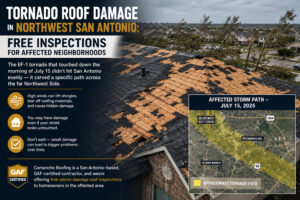
Roof Damage Near The Rim, UTSA & The Dominion? Free Inspections
Tornado Roof Damage in Northwest San Antonio: Free Inspections for Affected Neighborhoods The EF-1 tornado that touched down the morning of July 15 didn’t hit

Roof Insurance Claim in San Antonio: Wind & Tornado Damage
How To File a Roof Insurance Claim for Tornado and Wind Damage in San Antonio The July 15 EF-1 tornado left a lot of North
Get your free quote now!
Cody Profitt
Cody has built a reputation in the Austin area as the go-to source for installing complex roofing systems. He works directly with custom home builders on waterproofing high- end modern homes other roofers wont touch. In his free time, Cody likes to be with his growing family and playing guitar.
Frequently Asked Questions
Is metal roofing more expensive than shingle roofing?
Yes, in most cases metal roofing costs more upfront than shingles. However, many homeowners see stronger long-term value in metal because it often lasts longer and may require less maintenance over time.
Do metal roofs handle Texas heat better than shingles?
Metal roofing is often chosen for hot climates because it can help reduce heat buildup depending on the system, finish, and color. Shingles can still perform well, but they generally absorb more heat and tend to show sun-related wear sooner than metal.
Which roof lasts longer, metal or shingles?
In most cases, metal roofing lasts longer than shingle roofing when both are installed correctly and maintained properly.
How long should a roof last before replacement becomes necessary?
It depends on the roofing material, installation quality, weather exposure, and maintenance history. In San Marcos, heat, UV exposure, storms, and wind can shorten roof life over time.
Are shingles still a good option for homes in San Marcos?
Yes. Shingles are still a strong option for many San Marcos homes because they offer dependable protection, good curb appeal, and a lower initial investment.
Is metal roofing a good choice for storm-prone areas?
Yes. Metal roofing is often selected for its strong wind resistance and overall durability in areas that deal with hail, rain, and severe weather. Comanche Roofing’s San Marcos page also positions metal roofing as a strong local option for weather resistance and energy efficiency.
Should I switch from shingles to metal when replacing my roof?
That depends on your budget, long-term plans, and goals. If you want stronger long-term durability and lower maintenance, upgrading from shingles to metal can make sense during a full replacement.
Who should I call to compare metal and shingle roofing in San Marcos, TX?
You should call a trusted local roofing contractor who understands San Marcos weather, roof replacement planning, and the pros and cons of both roofing systems. Comanche Roofing currently offers both systems along with free inspections in San Marcos.