
Tornado Roof Damage in San Antonio: What To Do After the July 15 Storm

On the morning of Wednesday, July 15, a National Weather Service–confirmed EF-1 tornado with winds near 100 mph tore a roughly four-mile path across northwest San Antonio — touching down near Shavano Park, crossing Interstate 10 between The Dominion and Shavano Park, and moving northeast through the La Cantera, UTSA, and The Rim area. Roofs were torn from apartment buildings, trees came down across neighborhoods, and thousands lost power. If your home took wind or debris damage, this guide walks you through exactly what to do next — calmly and in the right order.
Table of Contents
ToggleThe most important thing to know: the damage you can’t see is usually the damage that costs you later. A roof can look intact from the ground and still have lifted shingles, cracked seals, or displaced flashing that lets water in days or weeks after the storm. Acting now — while the event is documented and fresh — protects both your home and your insurance claim.
First, stay safe
Before anyone thinks about the roof, take care of the immediate hazards.
- Stay off the roof. Storm-damaged decking and slick surfaces are dangerous, and climbing up can also disturb evidence your insurer needs to see.
- Watch for downed power lines and debris. Crews are still restoring power across the North Side. Treat any downed line as live.
- Be mindful of ongoing weather. This tornado hit during a wider round of severe storms and flooding across the region. Don’t put yourself at risk during active weather to inspect damage — it can wait a few hours.
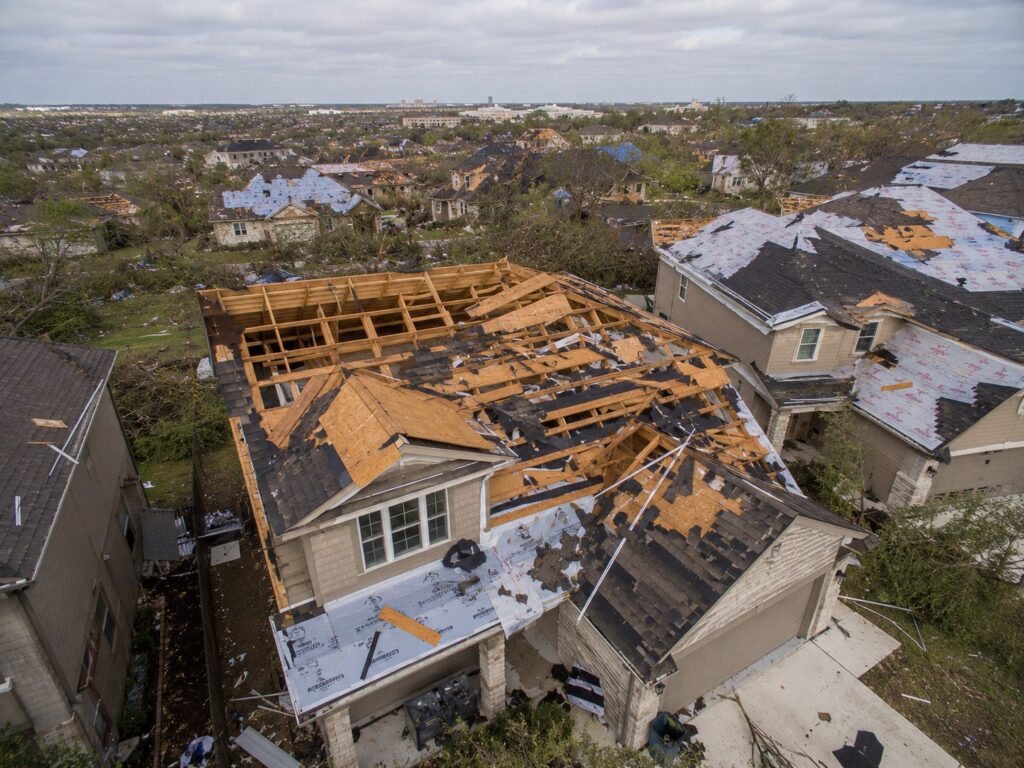
Second, document everything from the ground
Insurance claims are won or lost on documentation. You don’t need to get on the roof to build a strong record.
- Photograph and video the whole property — roofline, gutters, siding, windows, fencing, and any debris that struck the house. Include wide shots and close-ups.
- Note the date and time of the storm (July 15, ~8 a.m.) in your records. A confirmed, named weather event strengthens a claim.
- Save any interior evidence — water stains, ceiling spots, or leaks — with photos and dates.
- Keep receipts for anything you buy to prevent further damage (tarps, buckets, boards).
Third, prevent further damage
If water is actively getting in, temporary measures protect your home and show your insurer you acted responsibly.
- Emergency roof tarping — stops interior damage until a permanent repair can be scheduled. This is one of the most common needs after a tornado, and it’s something a local crew can handle same-day.
- Move valuables — away from active leaks and lay down containers.
- Don’t authorize permanent repairs yet — wait until the damage is documented and, if you’re filing a claim, until your adjuster has weighed in.
Fourth, get a professional roof inspection
Once you’re safe and the property is documented, the next step is an inspection by a licensed local roofer. A trained inspector will find the storm damage a homeowner can’t — lifted or bruised shingles, granule loss, compromised flashing and seals, and hidden decking damage — and produce a written report you can use for your claim.
Comanche Roofing is offering free storm-damage roof inspections for San Antonio homeowners affected by the July 15 tornado. We’re a GAF-certified, San Antonio–based contractor — not an out-of-town crew that follows storms and disappears — and we can document your damage clearly for an insurance claim.
A word on choosing who you work with
After every major storm, out-of-town “storm chasers” flood the area with door-knockers and pressure tactics. Protect yourself: work with a local, licensed, insured contractor with a real San Antonio address and a verifiable review history. Get the inspection findings in writing, and never pay in full upfront. (We cover this in more detail in our guide to choosing a roofing contractor in San Antonio.)
What to do right now
If your roof took damage from the July 15 tornado, don’t wait for a leak to tell you it’s serious. Call Comanche Roofing at (210) 201-2431 or book online for a free, no-pressure storm-damage inspection. We’re prioritizing same-day and next-day appointments for affected neighborhoods across the North and Northwest Side.

- Comanche Roofing in Austin
- (512) 796-9175
- 13804 Turbine Dr B, Austin TX 78728
- MON - SAT: 8AM TO 5PM
- Sunday: CLOSED
- Comanche Roofing in San Antonio
- (210) 201-2431
- 3918 Naco Perrin Blvd ste 113 San Antonio, TX 78217
- MON - SAT: 8AM TO 5PM
- Sunday: CLOSED
Schedule your free quote and inspection now!


Tornado Roof Damage in San Antonio? What To Do Now
Tornado Roof Damage in San Antonio: What To Do After the July 15 Storm call us today (210) 201-2431 On the morning of Wednesday, July
Emergency Roof Tarp: What to Do After a Storm Hits Your Austin Home
Emergency Roof Tarp: What to Do After a Storm Hits Your Home Target The first hour after a storm tears through Austin can determine whether

Metal vs Shingle Roofing in San Marcos, TX: Which Is Better?
Metal vs Shingle Roofing in San Marcos, TX: Which One Is Better for Your Home? When it is time for a roof replacement in San
Get your free quote now!

Cody Profitt
Cody has built a reputation in the Austin area as the go-to source for installing complex roofing systems. He works directly with custom home builders on waterproofing high- end modern homes other roofers wont touch. In his free time, Cody likes to be with his growing family and playing guitar.
Frequently Asked Questions
How do I know if my roof was damaged by the San Antonio tornado?
Damage isn’t always visible from the ground. Lifted shingles, granule loss, and cracked flashing often show no obvious signs until a leak appears. A professional inspection is the only reliable way to know.
Should I get on my roof to check for damage myself?
No. Storm-damaged roofs are unsafe to walk, and climbing up can disturb evidence your insurer needs. Document from the ground and let a licensed inspector handle the roof.
Do you charge for a storm-damage inspection?
No. Comanche Roofing is offering free storm-damage inspections for San Antonio homeowners affected by the July 15 tornado.