
Comanche Roofing | Trusted Austin Roofers for Hail Damage Roof Repairs
Hail Damage Roof Repair in Austin, TX
Hail damage is not always obvious right away. A roof can look fine from the street and still have bruised shingles, loosened flashing, or punctures that lead to leaks later. Comanche Roofing provides free hail inspections in Austin, photo documentation, and clear repair or replacement options based on what your roof actually needs.
Free hail inspection with photo documentation
Repair and replacement options for shingle, metal, and flat roofs
Emergency leak stabilization available when active leaking is present
Insurance claim support and adjuster meeting help
Lifetime workmanship warranty options for qualified installs
Schedule your free quote and inspection now!

Why Hail Damage Shouldn’t Be Ignored
Hailstorms in Central Texas can cause more than visible dents. The most expensive issues often come from damage you cannot easily see from the ground, like bruised shingles, fractured mat layers, displaced ridge caps, or weakened seals around vents and pipe boots. Hail events in the Austin area often create wind-driven impact patterns on one or two roof slopes, which is why we document each slope separately.
Even minor hail damage can shorten the life of your roof. Granule loss on asphalt shingles exposes the surface to stronger UV wear. Small punctures on flat roofing can allow moisture into the system. Loose flashing can lead to slow leaks that show up weeks later as ceiling stains, bubbling paint, or musty attic odors.
If your neighborhood experienced hail, it is smart to schedule for an storm damage roof repair in Austin early. You will know where you stand and you will have documentation ready if you decide to file an insurance claim.
Signs of Hail Damage
Not every roof shows obvious damage right away, especially if the roof is high, steep, or partially shaded. Here are common signs homeowners notice after a hailstorm:
Signs on the roof and exterior
Dents on gutters, downspouts, vents, chimney caps, or soft metal components
Shingles with dark impact marks or bruised spots
Granules collecting at the bottom of downspouts or in gutters
Cracked, split, or missing shingles
Damaged ridge caps or exposed nail heads
Loose or lifted flashing near walls and chimneys
Dented metal panels or damaged fasteners on metal roofing
Punctures, seam stress, or scuffing on flat roof membranes
Signs inside the home
New water stains on ceilings or walls
Damp insulation smell in the attic
Drips during wind-driven rain
Peeling paint near vents, skylights, or exterior walls
If you are not sure, that is normal. A professional inspection is the best way to confirm whether the damage is cosmetic or functional and whether repairs are enough.
Comanche Roofing Accreditations



How hail affects different roof types in Austin
Austin homes and commercial buildings use a mix of roofing materials, and hail affects each one differently. Our inspections are tailored to the system you have.
Asphalt shingle roofs
Shingle hail damage is often about impact and wear, not missing pieces. Hail can:
Knock off granules and expose the shingle surface
Create bruising that later turns into cracking
Weaken the seal strip so shingles lift in high wind
Damage ridge caps and starter shingles first
Metal roofing
Metal roofs are durable and often perform well in storms, but hail can still cause issues:
Dents that may be cosmetic
Damage to seams, locks, fasteners, flashing, and trim
Impact to vents, roof boots, skylight flashings, and soft metals
We evaluate whether the damage affects performance, water shedding, or long-term integrity. For performance upgrades after a hail claim, explore our Metal Roofing options designed for Central Texas conditions.
Flat and low-slope roofs
Flat roofs can be vulnerable to punctures and seam stress. Hail can:
Create small punctures that lead to moisture intrusion
Stress seams and termination points
Damage drains, scuppers, and edge details
For flat roofing, we focus heavily on seams, penetrations, and areas where water tends to sit. If your building uses a membrane system, our Flat Roofing team can assess seams, penetrations, and drainage details after hail impact.
Tile roofs
Tile can resist hail well, but larger hail can crack tiles or break corners. Damage may be scattered and easy to miss, so inspection and photo documentation are important.
Free Hail Inspection Process
What We Check
Walk the property and note exterior hail indicators like gutters and soft metals
Inspect roof slopes for impact patterns, fractures, or bruising
Check valleys, flashing, vents, skylights, and wall transitions
Evaluate ridge caps, seal integrity, and any exposed fasteners
Inspect attic areas when accessible for moisture clues and ventilation concerns
Take detailed photos and document affected components
Provide a clear summary with repair and replacement options
What You Get
Photo documentation
A plain-language explanation of what matters and why
Recommended next steps with no obligation

We keep the process simple and homeowner-friendly. Our goal is to give you clarity, not pressure.
Hail Damage Repair Options
Every roof is different. Some roofs only need targeted repairs, while others need replacement to restore long-term reliability. We will tell you what makes sense based on the damage pattern, roof age, and material type.
Targeted repair
Best when damage is isolated and the roof still has solid remaining life. Repairs may include:
Replacing damaged shingles or ridge caps
Repairing flashing and sealing vulnerable transitions
Replacing vents, pipe boots, and roof accessories
Addressing specific flat roof punctures or seam issues
Partial replacement
Sometimes one slope or a specific area takes the brunt of wind-driven hail. If the remaining roof is healthy and material matching is realistic, partial replacement can be a practical solution.
Full roof replacement
A full replacement is often the best option when:
Damage is spread across multiple slopes
Shingles show widespread bruising or granule loss
The roof is older and repairs will not restore reliability
Flat roof damage involves multiple punctures or seam compromise
You want to upgrade to a more storm-resistant system
If replacement is needed, we help you choose the right system for Austin conditions, including high-performance architectural shingles, standing seam metal roofing, or improved flat roofing assemblies.
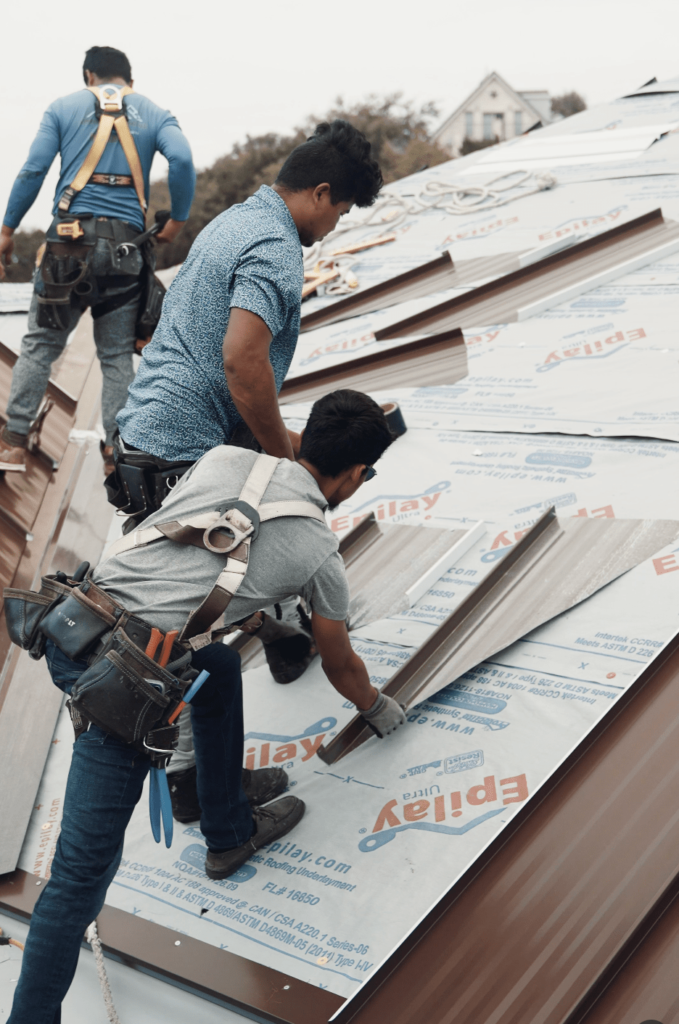
What to Expect After a Hail Inspection
After we inspect your roof, you’ll get a clear plan based on the damage pattern and roof condition. Most homeowners fall into one of these paths:
No functional damage: You get photos and peace of mind.
Repairable damage: We outline exact repair areas and priority items.
Replacement recommended: We provide a full scope and help you understand next steps for materials and scheduling.
Emergency tarping and leak prevention after hail
If hail breaks a skylight, exposes roof decking, or causes active leaking, emergency action matters. Water can damage insulation, drywall, framing, and interior finishes fast.
We offer emergency services when needed, including:
Emergency roof tarping
Temporary waterproofing
Quick repairs to stop active leaks
Dry-in solutions until permanent materials are installed
If your roof is actively leaking, call us right away at (512) 796-9175.
Why homeowners choose Comanche Roofing after hail storms
When a hailstorm hits, you need three things: a fast response, accurate documentation, and workmanship that lasts.
What you can expect with Comanche Roofing
Local Austin team serving Central Texas
Experienced crews across metal, shingle, and flat systems
Straightforward inspection results and options
Strong communication from inspection through cleanup
High-quality installation standards and attention to detail
Warranty-backed work for peace of mind
You should feel confident about your roof when we are done.
Serving Austin and Surrounding Communities
Comanche Roofing works with homeowners and commercial properties across the Austin metro and nearby Central Texas. We regularly serve Bee Cave, Buda, Cedar Park, Georgetown, Dripping Springs, Kyle, Lakeway, Leander, Pflugerville, San Marcos, and Round Rock.
If you’re outside these areas, reach out anyway. We may still be able to help, and our service coverage continues to expand across Central Texas.
If you suspect hail damage, schedule a free inspection and get clear photo documentation and repair options tailored to your roof system.
How it works
our Process
1
Emergency Call
Contact us 24/7 for immediate assistance.
2
Damage Assessment
Our team inspects your roof and documents all damage.
3
Insurance Support
We help you file and manage your insurance claim.
4
Repair or Replacement
Our crew completes the work efficiently and professionally.
5
Final Inspection
We ensure your roof is restored to its full strength and functionality.
Testimonials
What our customers are saying
We’ve had a great experience working with Comanche Roofing twice now. Cody Profitt came up with a great solution as we were looking for a rustic type roof that also could be warrantied.
Melissa Byrkit
I had a wonderful experience working with Cody, Dennis, Robert, and the entire crew. Everyone involved was friendly, patient, punctual, and professional. I could not be happier with the overall craftmanship and attention to detail.
Tom Schmidt
Frequently Asked Questions
How soon should I schedule a hail inspection?
As soon as it is safe after the storm. Early inspections help document damage before weathering and help you plan next steps quickly.
Can a roof have hail damage without leaks?
Yes. Many hail-related problems start as bruising, granule loss, or loosened flashing and become leaks later during heavy rain.
Will you tell me if my roof only needs repairs?
Yes. If targeted repairs are enough, we will explain what should be repaired and why. If replacement is recommended, we will explain what makes replacement the better long-term option.
Do you help meet with the insurance adjuster?
Yes, when scheduled. We can be present to help make sure the roof and all storm-affected components are properly reviewed.
What types of roofs do you inspect for hail damage?
We inspect and repair shingle roofs, metal roofs, tile roofs, and flat or low-slope roofing systems.