
Roof Repair vs Roof Replacement in San Marcos, TX: How to Choose the Right Option
If your roof is leaking, missing shingles, or showing signs of storm damage, one question matters fast: should you repair the roof or replace it?
Table of Contents
ToggleFor many San Marcos homeowners, this is where expensive mistakes happen. Some replace too early and spend more than they need to. Others keep paying for repair after repair when the roof is already worn out and no longer dependable.
The right answer depends on the condition of the full roofing system, not just the most visible symptom.
At Comanche Roofing, we inspect roofs across Central Texas that have been exposed to heat, UV rays, wind, heavy rain, and hail. In San Marcos, those conditions can shorten roof life and turn a small issue into a much bigger one faster than many homeowners expect.
This guide explains when roof repair makes sense, when roof replacement is the smarter move, and what homeowners in San Marcos should look at before making that decision.
What Is the Difference Between Roof Repair and Roof Replacement?
Roof repair means fixing a specific problem while keeping most of the current roofing system in place.
This may include:
- replacing missing shingles
- sealing a roof leak
- repairing flashing around vents, chimneys, or walls
- fixing a storm-damaged section
- correcting isolated water entry points
Roof replacement means removing all or most of the current roof and installing a new roofing system.
This is usually the better option when the roof has widespread wear, repeated leaks, major storm damage, or age-related failure that makes continued repairs a poor long-term investment.
In simple terms, roof repair is usually best when the damage is limited and the rest of the roof is still in good shape. Roof replacement is usually best when the roof system as a whole is wearing out.
Why This Decision Matters in San Marcos, TX
San Marcos roofs deal with conditions that are tough on roofing materials.
Local homeowners often face:
- long stretches of Texas heat
- intense UV exposure
- sudden heavy rain
- high winds
- hail-producing storms
- moisture that can worsen hidden roof damage
These weather conditions matter because a roof can still look acceptable from the ground while already having failing shingles, lifted flashing, weakened sealants, or moisture problems underneath.
That is why choosing between roof repair and roof replacement should never be based on guesswork. It should be based on the age, condition, damage pattern, repair history, and remaining service life of the roof.
Signs Roof Repair May Be the Right Choice
Roof repair is often the better option when the issue is isolated and the rest of the roof is still in solid condition.
You may be a good candidate for roof repair if:
The damage is limited to one area
A small leak around one vent or one section of wind damage does not always mean the whole roof has failed.
The roof still has useful life left
If the roof is still relatively new or in good mid-life condition, a targeted repair often makes more sense than replacement.
The surrounding roofing materials are still in good condition
If the shingles, flashing, underlayment, and decking around the damaged area are still performing well, repair may be enough.
The problem was caught early
Fixing a small roofing issue early can prevent much more expensive damage later.
The damage came from one specific event
If a recent storm damaged one section of the roof, repair may be enough as long as the rest of the roof remains sound.
The roof has not had repeated problems
If this is the first major issue and the roof has otherwise been reliable, repair is often worth considering first.
Common Roof Problems That Are Often Repairable
Many roofing issues in San Marcos can be repaired if they are found early and the damage is limited.
These often include:
- a few missing shingles after wind
- cracked or lifted shingles in one section
- flashing separation around walls or vents
- a localized roof leak
- minor hail damage in a small area
- sealant failure around roof components
- small sections of storm damage
The key is not just whether the issue looks small. The real question is whether the damage is truly isolated and whether the rest of the roof is still dependable.
Signs Roof Replacement May Be the Better Option
Roof replacement is often the smarter move when the roof is showing broader signs of failure.
You may need roof replacement if:
The roof is near the end of its service life
Older roofs naturally become more vulnerable to leaks, material breakdown, and storm damage.
You have leaks in more than one area
One leak can often be repaired. Several leaks in different parts of the roof usually point to a bigger system-wide issue.
Storm damage is widespread
If hail or wind damage affects large portions of the roof, spot repairs may not restore full protection.
Roofing material wear is visible across the roof
Curling shingles, cracking, granule loss, and brittle areas often mean the roof is wearing out overall.
Multiple roofing components are failing at the same time
If shingles, flashing, sealants, and penetrations are all starting to fail, repair becomes less efficient.
There may be moisture or decking damage underneath
Soft spots, sagging, or long-term water intrusion can point to deeper roof system failure.
Repair costs keep adding up
If you keep paying for one repair after another, replacement may be the better long-term financial decision.
How Roof Age Affects the Decision
Roof age is not the only factor, but it is one of the most important.
A newer roof with one damaged section is often a strong candidate for repair.
An older roof with visible wear, leak history, and new storm damage is much more likely to be a better candidate for replacement.
That does not mean every older roof must be replaced right away. It means roof age should be considered along with:
- current condition
- repair history
- storm exposure
- material wear
- expected remaining life
- cost of repair
- likelihood of future problems
An experienced roof inspection helps determine whether a repair is likely to hold up or whether replacement is the smarter move.
Cost Matters, but Cheap Is Not Always Smart
A lot of homeowners choose repair because the upfront cost is lower.
That makes sense in some cases, but not all.
A lower-cost repair today can end up costing more if the roof is already close to failure. You may end up paying for:
- another repair later
- interior water damage
- hidden moisture issues
- a full replacement sooner than expected
On the other hand, replacing a roof that still has strong remaining life is also unnecessary.
The better question is not just, “What costs less today?”
The better question is, “Which option protects the home better over the next several years?”
Storm Damage Can Change the Answer Quickly
In San Marcos, homeowners often face this decision after a major storm.
High winds can lift shingles and loosen flashing. Hail can bruise shingles, damage protective granules, and shorten roof life. Heavy rain can then expose those weak points and turn them into active leaks.
After a storm, the repair-versus-replacement decision depends on:
- how much of the roof was affected
- whether the damage is isolated or widespread
- the age of the roof before the storm
- whether the roof already had wear before the storm
- whether the roof can still perform reliably after repair
A storm can push an already aging roof past the point where repair still makes financial sense.
What Homeowners Often Get Wrong
There are two common mistakes homeowners make.
The first is assuming every roofing problem means full replacement.
That is not true. Some roofs only need a targeted repair, especially when the damage is limited and the system still has useful life left.
The second is assuming every leak can be patched cheaply and forgotten.
That is also not true. Some leaks are signs of broader roof failure, not isolated issues.
The best decision comes from a full roof inspection, not guesswork or panic.
Questions to Ask Before Choosing Roof Repair or Replacement
Before making a decision, ask:
- How old is the roof?
- Is the damage limited or spread across multiple sections?
- Has the roof leaked before?
- Are roofing materials failing in several areas?
- Was the damage caused by one storm or by overall aging?
- How much useful life is left?
- Will this repair solve the issue or only delay the next problem?
- Am I planning to stay in this home long term?
These questions help move the decision away from emotion and toward facts.
How Comanche Roofing Helps Homeowners in San Marcos Make the Right Call
At Comanche Roofing, the goal is to recommend what makes the most sense for the roof itself.
In some cases, that means a repair is the right move because the issue is limited and the roof still has solid life left.
In other cases, replacement is the better long-term investment because the roof has widespread wear, repeated failures, or a repair history that keeps getting more expensive.
A good roof inspection should show:
- where the damage is
- whether it is isolated or widespread
- whether the roof still has dependable service life left
- what the short-term and long-term options really are
That is how homeowners make a confident decision based on the condition of the roof, not pressure.
Final Thoughts
If you are deciding between roof repair and roof replacement in San Marcos, the smartest move is to look at the full roofing system, not just the most visible problem.
Roof repair is usually the better option when damage is limited, the roof still has useful life left, and the rest of the system is in good condition.
Roof replacement is usually the better option when the roof is aging out, failing in multiple areas, or likely to keep costing more through repeated repairs.
If your roof is leaking, has storm damage, or is showing visible wear, the next step is a professional inspection that gives you clear answers before the problem gets worse.

- Comanche Roofing in Austin
- (512) 796-9175
- 13804 Turbine Dr B, Austin TX 78728
- MON - SAT: 8AM TO 5PM
- Sunday: CLOSED
- Comanche Roofing in San Antonio
- (210) 201-2431
- 3918 Naco Perrin Blvd ste 113 San Antonio, TX 78217
- MON - SAT: 8AM TO 5PM
- Sunday: CLOSED
Schedule your free quote and inspection now!


Best Roofing for Texas Heat: Energy-Efficient Options (2026)
Best Roofing for Texas Heat: Energy-Efficient Options That Cut Cooling Bills Comanche Roofing is a roofing contractor serving Austin, San Antonio, and the surrounding Central
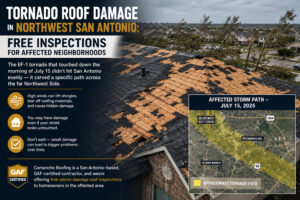
Roof Damage Near The Rim, UTSA & The Dominion? Free Inspections
Tornado Roof Damage in Northwest San Antonio: Free Inspections for Affected Neighborhoods The EF-1 tornado that touched down the morning of July 15 didn’t hit

Roof Insurance Claim in San Antonio: Wind & Tornado Damage
How To File a Roof Insurance Claim for Tornado and Wind Damage in San Antonio The July 15 EF-1 tornado left a lot of North
Get your free quote now!

Cody Profitt
Cody has built a reputation in the Austin area as the go-to source for installing complex roofing systems. He works directly with custom home builders on waterproofing high- end modern homes other roofers wont touch. In his free time, Cody likes to be with his growing family and playing guitar.
Frequently Asked Questions
How do I know if my roof needs repair or replacement?
If the damage is isolated and the rest of the roof is still in good condition, repair may be enough. If the roof has multiple leaks, widespread wear, storm damage across large sections, or is nearing the end of its life, replacement is often the better option.
Is it cheaper to repair a roof than replace it?
Repair usually costs less upfront, but it is not always the cheaper long-term option. If the roof is already failing in several areas, repeated repairs can add up quickly and still lead to replacement soon after.
Can storm damage in San Marcos lead to roof replacement?
Yes. Hail, wind, and heavy rain can cause enough damage to make replacement the smarter option, especially if the roof was already aging before the storm.
How long should a roof last before replacement becomes necessary?
It depends on the roofing material, installation quality, weather exposure, and maintenance history. In San Marcos, heat, UV exposure, storms, and wind can shorten roof life over time.
Should I replace my roof if it only has one leak?
Not always. One leak does not automatically mean you need a full roof replacement. If the problem is localized and the rest of the roof is still sound, repair may be the better option.
What are the signs that a roof is too old for repairs to make sense?
Common signs include repeated leaks, widespread shingle damage, granule loss, curling shingles, sagging areas, multiple failing components, and frequent repair needs.
Can a roof inspection tell me whether I need repair or replacement?
Yes. A professional roof inspection should identify the source of the problem, assess the overall condition of the roof, and help determine whether repair or replacement is the smarter move.
Who should I call for roof repair or roof replacement in San Marcos, TX?
You should call a trusted local roofing contractor that understands Central Texas weather conditions and can give you an honest inspection based on the actual condition of the roof.